Heat pumps have been standard in Scandinavian countries for decades, and they are now gaining ground in Poland as well. Sales of residential heat pumps in Poland grew by roughly 60% year-on-year in 2022 and remain strong into the mid-2020s, partly driven by the Czyste Powietrze subsidy programme and rising gas prices. Understanding how these systems work — and where they perform well or poorly in the Polish climate — helps property owners make better-informed decisions.
How a heat pump moves energy rather than generating it
A heat pump does not produce heat by burning fuel. Instead, it moves thermal energy from one place to another using a refrigerant circuit, a compressor, and two heat exchangers. In heating mode, it extracts low-grade heat from an outdoor source — air, ground, or water — compresses the refrigerant to raise its temperature, and transfers that heat to the indoor heating circuit.
The key efficiency metric is the Coefficient of Performance (COP): the ratio of heat output to electrical energy consumed. A COP of 3 means the system delivers 3 kWh of heat for every 1 kWh of electricity drawn from the grid. In practice, COP varies with the temperature difference between the heat source and the heating circuit: the smaller the difference, the more efficient the pump.
Air-source heat pumps (ASHP)
Air-source systems extract heat from outdoor air. They are the most common type installed in Polish residential buildings today because they require no ground works and can be installed in one or two days. An outdoor unit (the heat exchanger and compressor) is mounted on an exterior wall or on the ground beside the building; an indoor unit or hydrobox connects to the heating circuit.
Performance in Polish winters
Modern ASHPs rated to the European A+++ standard can operate efficiently down to -20°C outdoor temperature and maintain COP values of around 1.5–2.0 at -10°C. At +7°C — a common autumn or spring temperature — COP typically sits between 3.0 and 4.5. Annual Seasonal Coefficient of Performance (SCOP) in the Polish climate is usually quoted between 2.8 and 3.5, depending on the specific product, building insulation level, and heating circuit temperature.
Lower heating circuit temperatures improve efficiency considerably. A floor heating system running at 35°C requires the compressor to do less work than a traditional radiator circuit at 70°C. This is why retrofitting a heat pump into an older building with underfloor heating or oversized radiators gives better results than connecting it to a standard radiator system without modification.
Noise considerations
Outdoor units produce sound during operation — typically 45–65 dB(A) depending on the model and operating mode. Polish building regulations and local planning rules set limits on noise from technical equipment. Placement relative to property boundaries, bedroom windows, and neighbouring buildings deserves attention during the design stage. Several manufacturers now offer ultra-quiet models rated below 40 dB(A) for the outdoor unit.
Ground-source heat pumps (GSHP)
Ground-source systems extract heat from the earth using buried pipework (a horizontal ground loop or vertical boreholes) or from groundwater. Because ground temperatures at 1.5–2 metres depth remain relatively stable at 8–12°C year-round in Poland, GSHPs maintain higher and more consistent COP values than ASHPs through winter.
Typical SCOP comparison: A quality ASHP in a well-insulated Polish house might achieve SCOP 3.2–3.5. A GSHP with vertical boreholes in the same house might achieve SCOP 4.0–4.8. The higher efficiency comes at a higher upfront cost: borehole drilling adds PLN 15,000–40,000 or more depending on depth and ground conditions.
Ground loop sizing
Horizontal ground loops require roughly 25–40 m² of accessible garden area per kW of heating capacity. For a 10 kW system, this means 250–400 m² — feasible for rural properties but often impractical in urban or suburban plots. Vertical boreholes require much less surface area (typically one or two borings of 80–150 m depth) and are the standard solution where land is limited.
What installation involves
The installation sequence differs considerably between air-source and ground-source systems:
Air-source installation steps
- Heat load calculation for the building — determines the required system capacity in kW.
- Selection of outdoor unit location (structural base or wall mount).
- Refrigerant pipe routing between outdoor and indoor unit — requires a certified F-Gas technician under EU regulations.
- Connection to existing heating circuit, buffer tank, and hot water cylinder.
- Commissioning, parameter setting, and handover.
Ground-source installation steps
- Heat load calculation and borehole or ground loop design.
- Borehole drilling or ground loop excavation (a separate contractor is typically needed).
- Installation of the indoor heat pump unit and hydraulic connections.
- Commissioning and testing of the ground loop circuit.
- Connection to heating and hot water circuits.
Compatibility with existing heating systems
Heat pumps work most efficiently with low-temperature heating circuits. Before installation, it is worth assessing:
- Radiator sizing — older radiators designed for 70/50°C flow/return temperatures may need to be replaced with larger units rated for 45/35°C operation.
- Building envelope — a poorly insulated building has a high heat loss rate, which means either a larger (more expensive) heat pump or higher running costs.
- Hot water provision — most heat pump packages include a buffer tank for the heating circuit and an indirect cylinder for domestic hot water. Space in the utility room is required.
Running costs and comparison with gas
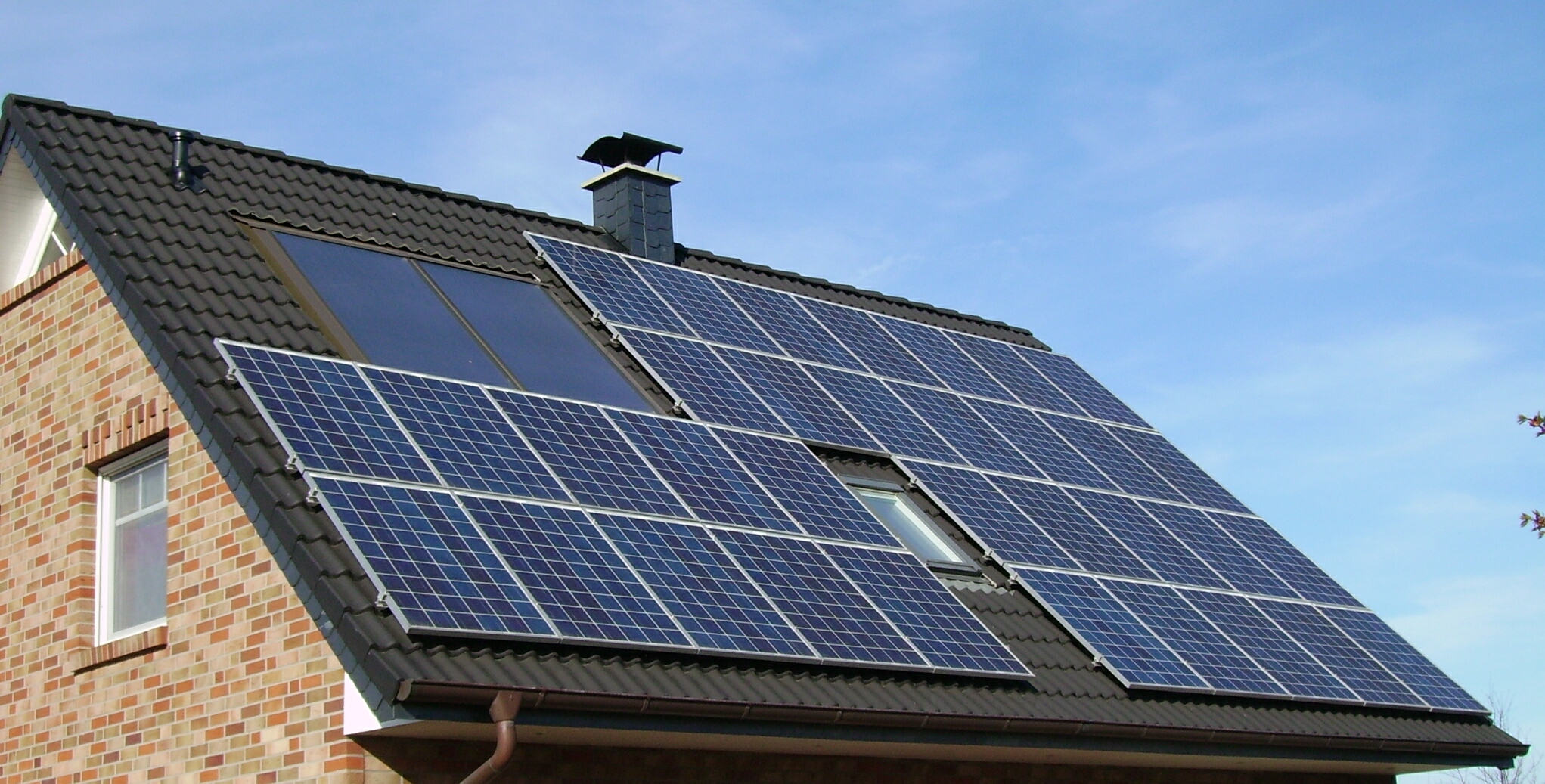
At 2025 Polish energy prices (roughly PLN 0.85–1.00 per kWh for electricity on a household tariff and PLN 0.22–0.28 per kWh for natural gas), a heat pump with SCOP 3.0 produces heat at an effective cost of approximately PLN 0.28–0.33 per kWh — comparable to gas but without the emissions. A heat pump paired with a rooftop PV system can reduce the effective electricity cost significantly, improving the economics further.
The Polish Heat Pump Association (PORT PC) publishes installation statistics, performance data, and guidance on installer certification, and is a reliable starting point for further research.